

In industrial facilities, thousands of pieces of equipment operate within complex, interconnected systems. Each asset’s technical specifications, maintenance history, operational status, and system relationships are critical to the facility’s efficient and sustainable operation.
What if all this information could be evaluated holistically alongside the equipment’s precise physical location?
Comprehensive Asset Management Through Geospatial and Digital Twin Technologies
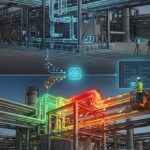
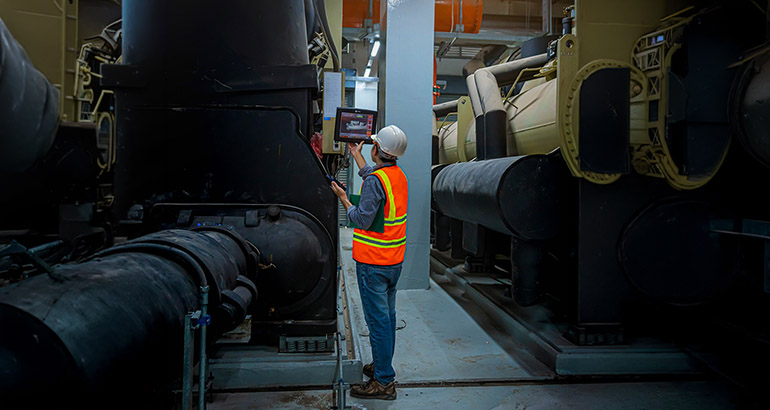
At the convergence of geospatial technologies, digital twins, IoT, and artificial intelligence, Asset Management takes on a much more strategic and comprehensive dimension. Industrial boiler rooms serve as prime examples of this approach in action.
When the 3D modeling of boilers, pumps, valves, and piping is linked with asset IDs, manufacturer specifications, maintenance logs, and real-time sensor data, it establishes a robust foundation for modern facility management.
Key Benefits of an Integrated Infrastructure
This integrated workflow empowers facility operations with:
- Spatial & Systemic Analysis: Visual and analytical examination of equipment physical locations and their dependencies within plant systems.
- Centralized Data Access: Instant access to maintenance history, technical datasheets, and equipment documentation via a single digital environment.
- Operational Monitoring: Tracking real-time equipment performance and working conditions through IoT data streams.
- Risk & Failure Management: Proactive evaluation of potential failure scenarios, root causes, and cascading effects across connected systems.
- Decision Support: AI-driven analytics optimizing maintenance prioritization, early warnings, and intervention workflows.
A Dynamic Infrastructure That Generates Integrated and Long-Term Value
At Ölçek Mühendislik, our focus is on transforming real-world physical data into dynamic digital infrastructures that integrate seamlessly with engineering workflows, connect across enterprise systems, and generate long-term value.
Because effective asset management is achieved not merely by monitoring the current state of equipment, but by evaluating physical infrastructure, operational data, and engineering expertise through a unified approach.